Sunday, 22 February 2009

WEEK 12

GIFT GIVING


At most times it is not very easy to buy someone a gift. It actually depends on who you are buying the gift for. Buying a gift for someone can also be linked to the emotion that is shown in what you buy. Women tend to give more christmas gifts rather than men. Women devote more of their time in buying desired and appropriate gifts, It was shown that 10% of women this year had returned presents to shops from which mostly all of the presents were given by men.
http://www.youtube.com/watch?v=M9h_I8lFErw

The search theory explains some of tyhe observed practice, but does not state why women spend most of their time and attention to buying gifts. Women tend to find it worthwhile to invest in a tight network of extended family and close friends. Men find it more worthwhile to invest in a goal oriented mentalitym which will save them large amount of time spent shopping. Buying gifts involve an attention to shopping detail that men simply do not have in the first place.


WEEK 10

Heuristics, Memory and Nostalgia

These things mentioned above are a part of a persons attitude towards purchasing a product or the different options people have an influence for on buying a product.

Heuristic is known as a method that is used to help solve a problem, it is normally used to come up with a solution.
Heuristics is something people will look back onto when they want to make a decision in a hurry, for example they will tend to purchase from a store they usually go to or buy the same product they have purchased before instead of considering new options.


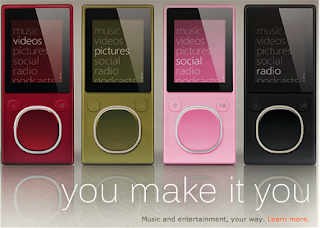
Just like this picture a customer can decide which product they want but have to come up with a solution from the range of different options they may have.
These kinds of decisions are not always beneficial for the consumers as for example if a customers has had a bad experience with a certain brand they will automatically refer to not making a purchase with them again. Telling others about the experience can also lead to them assuming that they will have the same experience rather than looking at the overall record of the organisation. Heuristics again is the rules that are made up in a customers mind which leads to making speedy decisions.Customers use this method as it is a way of helping them decide which kind of products they want to purchase and where would be the best place for them to purchase it from.

Learning is getting the knowledge out of what you see and memory is where you store the knowledge you get. Everytime you see an advertisement the objective behind it is for you to learn something from it and gain something out of it.


This memory process shows that when you gain information you store it in you memory and it is always kept there so that it can be found when needed.
It is usually said that the mind is like a computer in many ways because it allows input to the system and output is later used to retrieve the information. All the information that is entered in the memory system is entered in a way that it can be easily recognised.


Marketing businesses tend to use nostalgia in their adverts as this can help to gain customers attention as it brings emotions in and gets people to start thinking of their past days and the wanting for them to experience it all over again. They tend to do this by advetising with the things that people have already experineced to bring back the memories.
Looking at an example:

http://www.youtube.com/watch?v=qo_MMBcTnSU
Looking at this video which is a car advert. The reason i think it relates to them using nostalgic theme is that he is refering every aspect of the car to how the olden times cars used to work. So he explains how the old time cars where so good which cannot be found today but how this speed racer is better that the old cars made.

Agencies use alot of nostalgic ideas for their adverts in todays times that their brands are now known as one of the best leading brands. They do this by either making an advert and trying to use the past features like they will either include very old songs or have the products look abit like the olden times.

Thursday, 22 January 2009

WEEK 9

HOW TO IMPRESS A WOMAN, HOW TO IMPRESS A MAN

A woman
-Compliment her -Respect her -honour her
-Cuddle her -Kiss her -Caress her
-Love her -Stroke her -Tease her
-Comfort her -Protect her -Spend money on her
-wine and dine her -Buy things for her -Listen to her
-Care for her -Stand by her -Support her
-Hold her -Go to the ends of the Earth for her

A man
-Show up naked -Bring food

Gender responses
In a research a group of people were bought into a room and later asked to remember various items there.
The men remembered the big pictures like of an office like a location of a desk or a bookshelf.
The women remembered more intimate details like a vase of flowers in the corner or a picture of a husband and wife on a bookcase.

Men’s approach to buying and communication
Less patience with long copy.
Less disposed to pictures.
Look for clarity and simplicity.
Fewer men’s lifestyle mags than women’s lifestyle mags.
Men to be relatively obsessive and have narrowly defined hobbies.
Men look for humour in ads.
Men’s humour is more cruder and is likely to be aggressive.

Implications for advertisers
For women
Ads often are more detailed for example toiletry ads.
Women appreciate very fine distinctions, such as five different variations of shampoo for curly hair, straight hair, oily hair, dry hair etc.


In direct mail women respond to an emotional style.
Charities have tended to use a female/emotional style of writing in their fundraising mail shots.


For men
Toiletry ads focus on a single product.
Men think in a more macro way and need to be shown the big picture.
Men respond to a factual style.


A re written factual letter for men generated a response of 85% better than the original female pack.
When the male/factual version was sent to women response rate was 15% lower than the original.

WEEK 8

ENTERPRISE WEEK

I did not really take part in many activities that were involved in the enterprise week but i will explain about my experience to the event that i attended.

This was the week where a couple of events were held for all the students students studying business and marketing. There were a number of events we could attend where we could get help with the assignments we were working on. In these events we had a number of successful people from different organisations that were there to answer any questions we had including Alan rich.

I could manage to attend one of the events where we had a couple of graduates from our institution for example Rob Mullet who was there to ask questions to get the rest of us started and to give us some information they though e would need as they have been where we are now.
Some of the questions asked at that particular event with answers

Q) How does the recession affect PR and Marketing?
A) Accountable budgets- the businesses should know what their budget is. They should focus on the brands that they think will go ahead.
They will not reduce their market budget, they will concentrate and focus on hundreds of brands.
PR- There is no solution because there is no problem.
Measurement- They should not do it if the can’t measure it.
Accountability- They have to think of how transparent they will be and how their brands will be.
Innovation- What is the stand out factor.

Q) Agencies are employing white middle class people under the age of 40 is this a problem?
A) It is true in advertising agencies not in advertising as a whole. IPA has launched a diagonal thinking, its meant to demonstrate if you are unbalanced to work in the marketing industry. Although agencies are trying to change that fact.

Q) Is there a danger that advertising will lose its role and become part of PR and so on?
A) Looking to achieve revenue growth and no petition from different agencies that is where the competition comes from. Everything is changing from media to digital. It is all about selling stuff. If the message is not right and the product is not right then it won’t attract consumers. New ways of reaching to customers should be accountable. Brands have to evolve and adapt in order to survive.

If you are positioning yourselves as business advisors it is your duty to let them know if anything is wrong with their brand before advertising.
Advertising is a powerful force.

What i personally got out of this lecture was that most of the questions we would like to ask regarding our unit was answered. This was mainly because we had the higher level students asking questions and as they have already completed what we are learning they have a better idea of what we need in terms of understanding and positioning.
It helped me get an insight into the industry and the different kinds of agencies. I also gained alot of information on what job roles consist of and how they are different from the others together with being so relative to each other. I found it very helpful in terms of putting my assignment together as well, as the speakers that were there were very helpful for example alan rich has alot of experience in the marketing industry and having him giving out information gave me a very deep insight to what i want to do in the future.

WEEK 6 7TH NOVEMBER, 2008

GENDER DIFFERENCES IN ADVERTISING

Gender differences in world view values
From a number of academic researches and studies it shows that females tend to show a greater interest for people than males do. Nature explanations propose that human behaviour including moral behaviour is geared for reproductive and genetic purposes. Therefore primary caregivers which tend to be the females tend to foster nurturing whereas other parents such as males foster a competitive orientation. Nurture standpoints hold that these gendered roles and orientation are developed through cultural agents such as parents, media and schools.

Gender differences in information processing
Differences in processing style have been established in past research on gender and information processing by Meyers-Levy, 1989. According to the selective model which are the females processing entails effortful elaboration of message content, while males tend to heuristically process advertising information by focusing on cues. Some net ratings found that women typically spend more time looking at a web page than men do.


Advertising order effects
Past research in this area has shown that the order in which people encounter information may affect persuasion. The two main effects are primacy and recency. Primacy and recency effects can be explained through different psychological processes and factors like:
-Interest in the subject
-Overall involvement
-Attitude strength

Based on previous research on message order effects in persuasion, we know that subjects with high interest in a topic exhibited primacy, whereas those with low interest exhibited recency effects. Primacy effects occur when respondents are motivated to process the information and show greater critical thinking toward later information, whereas recency effects are observed when respondents are not motivated to process the information and therefore do not direct much attention to the task at hand. While recency and primacy seem to depend on the characteristics on the task or the processing environment, it is also important to consider gender based differences in information processing style.

Gender and advertising order effects hypotheses
As discussed, when the message environment does not call for a particular processing strategy, females tend to use and elaborating processing strategy while males use a scheme based. Primary effects occur under conditions consistent with high elaboration and recency under heuristic processing conditions. There for one should expect that:

1) as long as the task does not encourage a particular type of processing, females will exhibit more primacy effects than recency effects.

When the conditions do not favour extensive elaboration, males should use a low involvement heuristic, based on the most recent information. We expect:

2) as long as the task does not encourage a particular type of processing, males will exhibit more recency effects than primacy effects.

Our study supports the use of sex demographics to help explain persuasion but not necessarily targeting. Still advertising researchers should be aware of these findings and take them into account, and further establish what the advertising and media implications are.


WEEK 5 31ST OCTOBER, 2008

PERSONALITY & SELF- CONCEPT

Personality is a persons unique make up, which consistently influences the way the person responds to his or her environment. Personality is Character, nature, temperament, make up, persona and identity. It is those inner psychological characteristics that both determine and reflect how a person responds to his or her environment.

-The external aspect is how a person interacts with other people.
-The internal aspect is a combination of their values and attitudes.
-The dynamic aspect is facing a new situation on how they behave for example social adjustments.
-The consistent aspect is their characteristic style.

Personality develops from the level of anxiety felt at being a dependent child.
-Going towards others (affection/affiliation) complaint, prefer brands
-Going against others (Power/ domination) Aggressive, old spice
-Turning away from others (isolation/ indifference) detached, drank tea, no brand loyalty

The big five scale of personality type
Openness to experience
Conscientiousness
Extroversion
Agreeableness
Neuroticism


Self concept is when people see themselves as they imagine pthers seeing them. Others see your publicly consumed goods. Therefore material possessions can be seen to be used as expressions of the shelf.

Self concept theory
-Newcomb defined self concept as the individual as perceived by that individual in a socially determined frame of reference.
-The perceived self influences the persons perception of the world around him.
-Self concept does not necessarily reflect reality- a person who is regarded by others as very successful may perceive themselves to be a failure.


-Self image- The kind of person we think we are.
-Ideal self- Is the kind of person we would like to be which may differ from our actual image. The larger the gap the lower the self esteem.
-Self esteem- is the extent to which we like ourselves.


WEEK 4 24TH OCTOBER, 2008

SEGMENTATION

The identifiable profilers become the basis for segmentation for example:
-Age
-Gender
-Social class
-Personality
-Colour and type of hair

In the Victorian times carbolic soap, bright red in colour with a very interesting fragrance was used to clean everything form washing the floor to also washing your body.
Nowadays we have different shampoos or products for example for greasy hair, dry hair, blonde hair, red hair, brunettes, dyed hair, tinted hair, grey hair, thin hair, curly hair, damaged hair, frequently washed hair and for dandruff as well.


Thinking of teeth and toothpaste there are a wide range of products available like to prevent gum diseases, for white white teeth, to protect against tooth decay, for added confidence or specially for babies. People use toothpaste for fresh breath, for the pain during brushing or also to get the cigarette smell away.


What is STP Marketing
-S- segmentation
-T- targeting
-P- positioning

Segmentation by Smith (1957). Segmentation is based on the observation of evolution of demand and represents a more precise and rational adaptation of the product and the marketing effort to meet customers or users demand.
Segmentation by Kotler (2000). The subdividing of a market into homogenous subsets of customers, where any subset may conceivably be selected as a target market to be reached with a distinct marketing mix.

STP Marketing by Doyle


The reason we segment is so that we can better match our customer needs by increasing brand quality.
To enhance profits by raising prices in some premium sectors.
To retain customers through FLC.
To target communications and to market segment share.
-Effective- truly different needs from other segments?
-Identifiable- how can you find those people?
-Profitable- is the segment big enough to offer real profits?
-Accessible- can you reach this group easily?
-Actionable-can it be done?